
Insights
Seeing activity is not the same as knowing whether the whole will come together.
Organizations already have strategy, plans, project management, operations systems, KPIs, dashboards, meetings and communications.
Work can be active. Progress can be reported.
But the required Achievements may still be missing, poorly defined, disconnected, unowned or unsupported.
The accountable leader needs confidence, early enough to act, that all required Achievements are identified, owned, causally connected and progressing together.
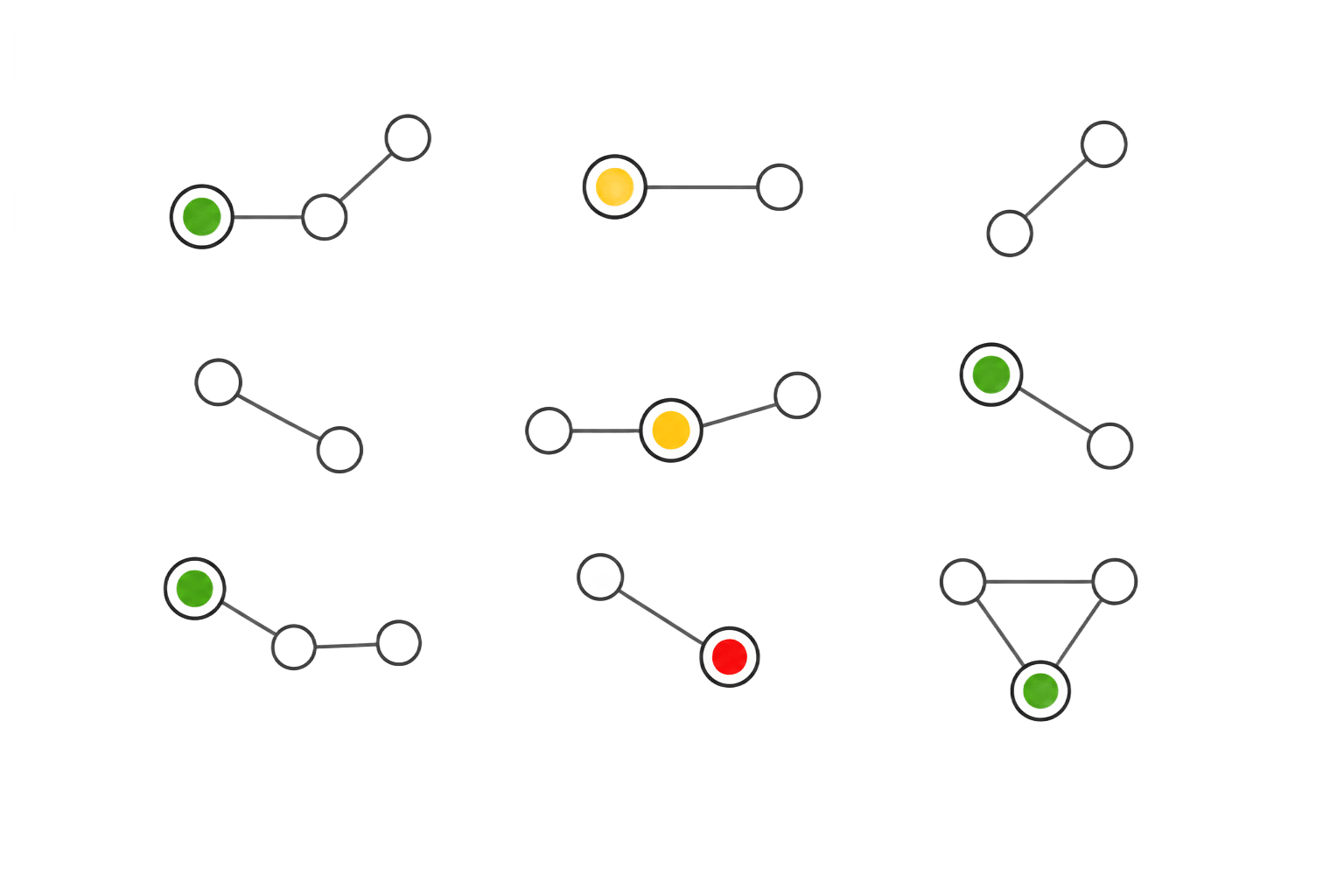
Activity can look like progress.
Completion can be tracked. Status can be reported.
Those signals describe parts of the work.
They do not by themselves establish that all required Achievements are present, owned, causally connected, supported and progressing together.
Visible activity can coexist with structural weakness.
Why This Happens
Organizations use a patchwork of strategy documents and plans; project, program and portfolio management; ERP, CRM, workflow and development systems; KPIs, dashboards, scorecards and OKRs; meetings, email and manual coordination.
Each mechanism manages or describes part of the whole.
The practical substitute for one authoritative representation is all of those mechanisms plus human effort to interpret and connect them.
What Is Missing
One current, authoritative representation of all required Achievements and their causal relationships.
Without it, required Achievements may be missing, poorly defined, disconnected, unowned, overloaded or unsupported.
Some may become visible only after failure reaches lagging measures.
The more important problem is whether the complete set of things that must happen is present, causally connected and realistically capable of coming together.
The Cost
Structural weakness can appear as:
- disconnected or unsupported Achievements,
- warning conditions that persist before lagging impact appears,
- cascading exposure from a failing dependency,
- repeated pushes and late changes.
By the time the effect reaches lagging measures, there may be less time to intervene while the result can still be influenced.
The Underlying Truth
The practical substitute for one authoritative representation is fragmented mechanisms plus human effort to interpret and connect them.
Existing systems can continue to manage how work gets done.
The missing layer is the maintained representation of what must be achieved, why, how those Achievements causally come together, and whether they will.